April 24, 2023
Alcoa Foundation surpasses $20 million milestone in environmental giving
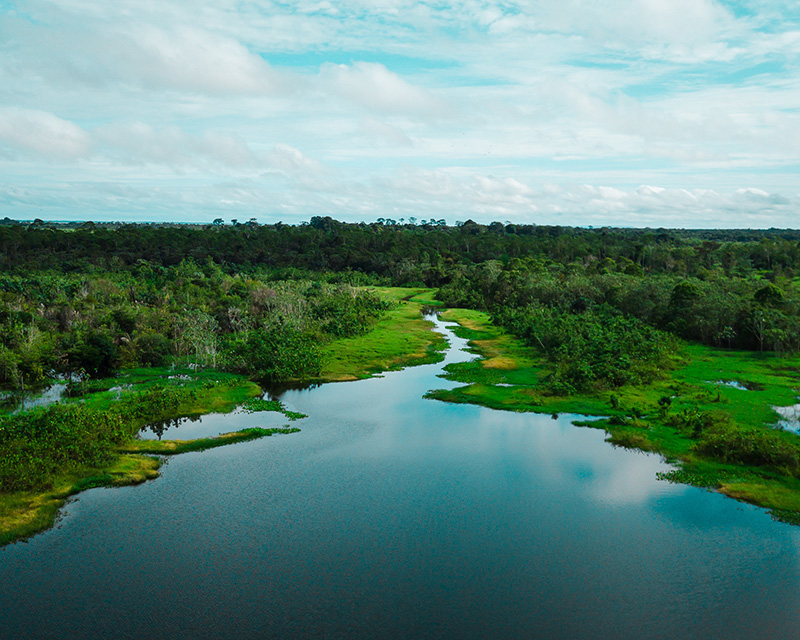
Protecting and preserving the environment has been a hallmark of the Alcoa Foundation since its founding. That legacy continues to grow, with more than 70 nonprofit partners receiving more than $20M million in environmental grants since 2017, when the legacy foundation separated into two standalone foundations.
Approximately half of the foundation’s annual giving is directed to projects that provide environmental and social benefits through biodiversity conservation and climate change mitigation and adaptation. The remaining funds are earmarked for promoting equitable access to education and skills-building opportunities.
“It is through collaboration with our nonprofit partners that we can provide meaningful impact and create sustainable value for the communities where Alcoa operates,” said Rosa Garcia, President, Alcoa Foundation.
In celebration of Earth Day, here are three nonprofit partners and their projects that are helping Alcoa Foundation fulfill its mission of addressing local needs in a sustainable manner.
The Nature Conservancy
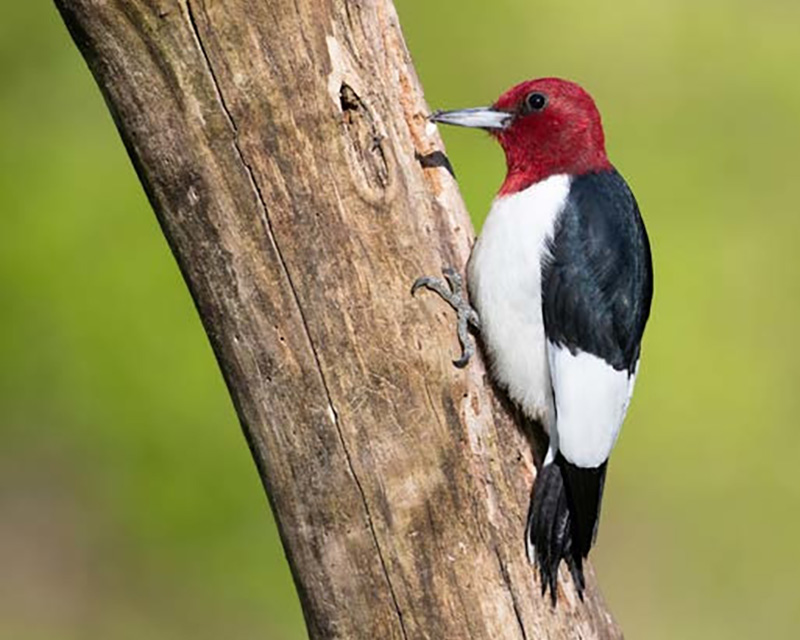
It is estimated that around 3 billion songbirds have been lost throughout North America over the past several decades, primarily due to habitat loss. Using an $80,000 Alcoa Foundation grant, The Nature Conservancy (TNC) has worked to conserve these flying balladeers through its Forestry for the Birds initiative.
Completed in 2022, the project targeted landowners and foresters in the state of Indiana (97 percent of the state’s forest is privately owned). It focused on the proper management of nearly 5 million acres forests to create beneficial habitat for 12 of the state’s songbirds.
“Here, in Indiana, we have abundant forest,” said Perry Seitzinger, Consulting Forester, Seitzinger Forestry. “But what is happening over time is that these forests are maturing and becoming older. And with the lack of disturbance, we have a lack of age-class diversity. There are certain birds that rely on young forest. There are certain birds that rely on old, mature forest, and there are also generalists that need diversity throughout the forest. Without science-based forest management, we’re going to continue experiencing a population decline in quite a few species of birds.”
The Forestry for the Birds program used a multi-prong approach to education and guidance on forest management, including:
- The Forestry for the Birds Pocket Guide, which provides bird-focused information about habitat management for landowners, foresters, wildlife biologists and other interested individuals;
- The Silviculture Guide to Forestry for the Birds, which is a support document for writing forest and wildlife management plans;
- A bird management profile for each of the 12 targeted species—dubbed the Birders’ Dozen—published in the Indiana Woodland Steward newsletter, which has a circulation of 30,000 subscribers;
- The Forest Management for Songbird Conservation conference, which was attended by more than 100 professionals, landowners and researchers; and
- Presentations to private woodland owners, bird-watching clubs and even an industrial plant.
“We created this program as a way to highlight how managing for multiple goals can be beneficial to all,” said Chris Neggers, Director of Forest Conservation, TNC Indiana. “Timber harvesting creates young forest, prescribed fire creates an open understory and all of these practices benefit different bird species. With Forestry for the Birds, landowners and foresters know what to do and how to do it to help songbirds thrive.”
The community response has been positive.
“My wife and I own property in Brown County,” said Jerry Long. “We have about 168 acres total. We’ve done a lot of tree planting. We have some areas where we’ve done some controlled burns. We’ve also done a lot of selective harvesting. The motivation is just to do what’s right for the environment.”
Learn More.
Watch a video.
International Union for Conservation of Nature
Why do some ecosystem restoration projects succeed while others fail? How can winning projects provide social and economic benefits to local communities in addition to ecological ones?
The three-year BEFoRE (Benefits From Restoration) project by the International Union for Conservation of Nature (IUCN) is seeking answers to those questions by examining the biodiversity and community benefits of existing restoration projects in Iceland and Brazil. The effort, which began in 2022, is supported by a $1.5 million Alcoa Foundation grant and is being implemented in partnership with the University of São Paulo and Iceland University.
“The scale of degradation is reaching a point where it will not be possible to fully recover ecosystems as we know them today” said Marcos Valderrabano, Project Manager, IUCN. “Restoration initiatives seeking to reverse degrading processes can reduce the risk of ecosystem collapse and equally impact peoples’ livelihoods and economic well-being.”
While the project will not involve the direct implementation of restoration work, it will provide needed research on the effectiveness of restoration projects and best practices that will inform future interventions. It also will support progress toward the new United Nations Global Biodiversity Framework, which has targeted restoring at least 30 percent of degraded areas or having them under restoration by 2030, and the UN Decade on Ecosystem Restoration, which is a rallying call for the protection and revival of ecosystems around the world.
The knowledge gathered during the project, which will run until 2025, will be developed into a model that can be applied and scaled up across geographies to increase effectiveness of restoration projects.
Learn more.
Earth Day Canada
Proving that good things do come in threes, around 3,000 metric tons of organic waste from 350 Canadian organizations will be diverted from the landfill by June 2024. Funded by a three-year $300,000 Alcoa Foundation grant and led by Earth Day Canada, the Action Reduction program is aimed at not only reducing organic waste through public awareness, but also eliminating the methane gases that such waste generates.
Participating organizations in the Portneuf, Manicouagan, Bécancour and Nicolet-Yamaska regional county municipalities are receiving guidance on how to implement an organic waste collection system.
Two levels of support are offered depending on the capacity and desire of a business to get involved. Basic support includes assistance in implementing an organics collection system and employee training in waste sorting. Advanced coaching is currently being offered to 110 businesses and it involves support for the development of zero waste, source reduction, and reuse and recovery strategies for residual materials. Businesses that benefit from the more in-depth support are rewarded with an Action Reduction certificate.
“Action Reduction’s strength lies in its adaptability to the needs of the businesses it supports,” said Valérie Mallamo, executive director, Earth Day Canada. “A café, a grocery store, an agri-food processor and a pharmacy have very different needs when it comes to waste management. Our experts tailor plans to reflect this reality.”
The Earth Day Canada team is also offering training sessions in the participating areas to educate teachers and encourage students to help with organics collection.
Learn more.